Dere Types: 12 Anime Archetypes Explained (+ Quiz)
By Nayan Dhabarde · Published October 11, 2026
Dere types are anime and manga labels for how a character acts toward someone they love. Each name joins a word for the character's attitude with deredere (でれでれ), Japanese for acting lovey-dovey or infatuated. The four main dere types are tsundere (harsh, then sweet), yandere (loving, then obsessive), kuudere (calm on the outside) and dandere (quiet and shy). Take the quiz to find yours.
Jump to: All types · Quiz · Tsundere · Yandere · Kuudere · Dandere · Deredere · Himedere · Other types · Writing a dere · FAQ
All 12 dere types at a glance
| Type | Root word | Around the person they like |
|---|---|---|
| Tsundere | tsuntsun, aloof | Harsh or cold at first, sweet underneath |
| Yandere | yanderu, mentally ill | Loving at first, then possessive or obsessive |
| Kuudere | kūru, cool | Calm and collected, rarely shows feelings |
| Dandere | danmari, silent | Quiet and shy until they trust you |
| Deredere | deredere, lovey-dovey | Openly sweet and cheerful with everyone |
| Himedere | hime, princess | Acts like royalty and wants to be treated like it |
| Oujidere | ōji, prince | The male counterpart of a himedere |
| Kamidere | kami, god | Proud enough to act like a god |
| Bakadere | baka, fool | Sweet, clumsy and often oblivious |
| Undere | un, yeah | Agrees with everything the person they like says |
| Kanedere | kane, money | Drawn to money or status before the person |
| Byoukidere | byōki, illness | A gentle love interest living with a serious illness |
The first four are the established ones, with entries in Wikipedia's glossary of anime and manga. The rest are fan-made labels, so their definitions vary a little from site to site.
Quiz · 8 questions
Which dere type are you?
Someone you like compliments your work. You…
Tsundere
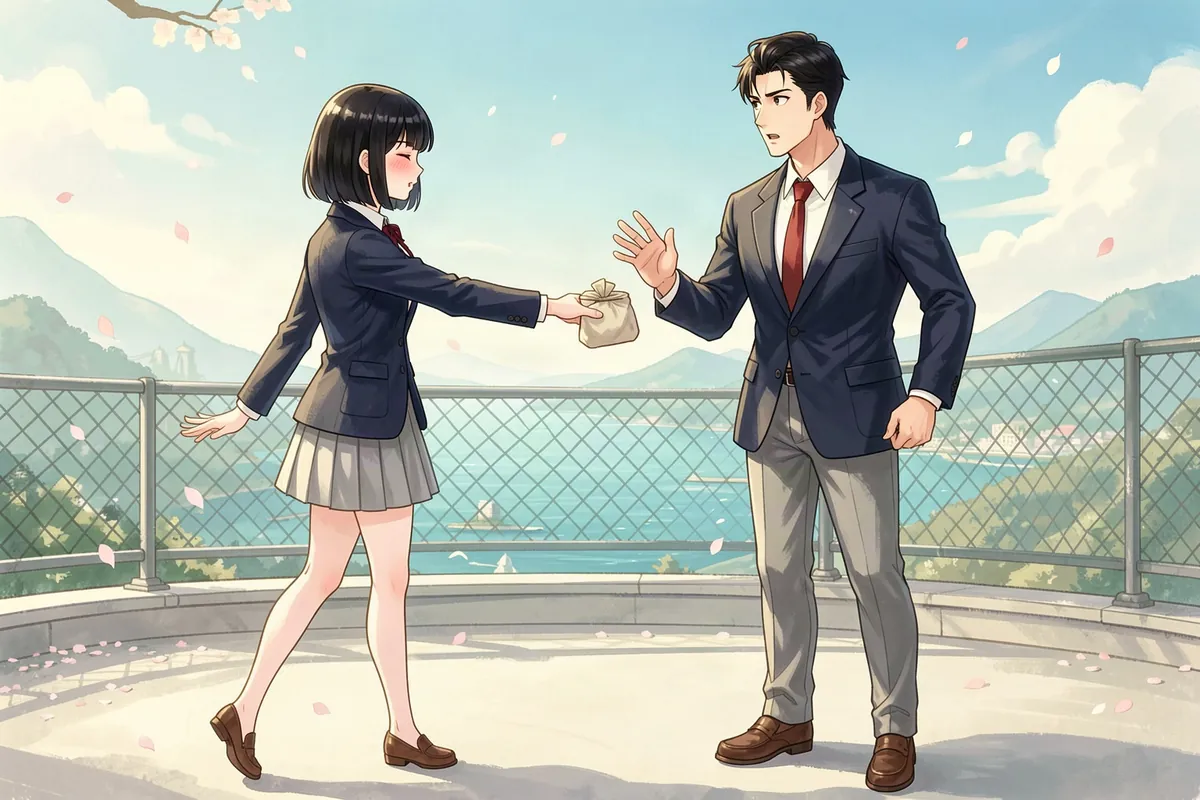
A tsundere moment, drawn in Hoshimori's art style.
A tsundere is a love interest who is "usually harsh, stern, cold or hostile to the person they like," in the glossary's words, and softer underneath. The name joins tsuntsun (standoffish) with deredere.
A tsundere shows love through insults with no bite, help that happens "by accident," and the line every fan knows: "It's not like I did this for you." The fun is in the gap between what they say and what they do.
The type grew out of Japanese dating-sim and visual novel games (see our best otome games). By 2006, a maid café in Akihabara was holding tsundere events, according to Wikipedia. Koichi Ichikawa has called Lum from Urusei Yatsura "the first tsundere character," and voice actress Rie Kugimiya became known for tsundere roles such as Taiga Aisaka in Toradora! and Louise in The Familiar of Zero.
Yandere
A yandere is affectionate at first, then turns possessive or obsessive, and is often willing to go to extreme lengths to stay with the person they love. The name joins yanderu (病んでる, mentally or emotionally ill) with deredere.
Early on, a yandere looks like the perfect partner: attentive, devoted, always there. Then the attention turns into tracking, and the devotion into removing anyone who gets close. Stories usually play the type for suspense or horror.
The best-known example is Yuno Gasai from Future Diary (Mirai Nikki) by Sakae Esuno. She was voted the most popular yandere character in a 2013 BIGLOBE poll, and her expression became the "yandere face" meme, per her Wikipedia article.
Kuudere

A kuudere moment, drawn in Solenne's art style.
A kuudere is "calm and collected on the outside, and never panics," per the glossary. Kuu comes from kūru, the Japanese borrowing of "cool."
Feelings do exist under the calm; they just come out in small, exact ways. A rare smile, one honest sentence or a quiet act of help counts for a lot from a kuudere.
Rei Ayanami from Neon Genesis Evangelion is the usual reference point. Her Wikipedia article says she "set an example for the kuudere stereotype" and that quiet, emotionless heroines modeled on her appeared in many later series.
Dandere
A dandere is quiet and asocial, "generally afraid to speak, fearing that what they say will get them in trouble," as the glossary puts it. The name comes from danmari (silent).
With the right person, a dandere opens up and often turns out to be funny, warm and loyal. That shift is the whole arc. Hinata Hyuga in Naruto fits the pattern: reviewers praised her voice actress for conveying the character's "shyness, anxiety and determination".
A dandere and a kuudere can look alike at first. The difference is the reason: a kuudere is calm by temperament, and a dandere is quiet out of nerves.
Deredere
A deredere is openly sweet, cheerful and kind to everyone, with no hidden side. The name is just deredere itself. They say what they feel, cheer up everyone in the room and fall for people fast and hard.
The type is easy to write flat. Give a deredere one fear they hide behind the cheer, or one thing they're terrible at, and they get much more interesting.
Himedere and oujidere
A himedere (hime, princess) acts like royalty and expects to be treated like it, whether or not she has a title. An oujidere (ōji, prince) is the same type for a male character. Under the demands, both usually care a great deal about the people who put up with them, and the story is about getting them to admit it.
Other dere types
- Kamidere (kami, god): goes past proud into acting like a god, and expects to be adored for it.
- Bakadere (baka, fool): sweet, clumsy and often oblivious, a love interest who brings the comedy.
- Undere (un, "yeah"): agrees with everything the person they like says, which turns tense when they finally disagree.
- Kanedere (kane, money): drawn to wealth or status first, and has to learn to want the person.
- Byoukidere (byōki, illness): a gentle love interest living with a serious illness, common in tearjerker romances.
Writing a dere character
A dere type tells you how a character behaves. The story comes from why. A tsundere who was mocked the last time she showed her feelings plays very differently from one who is simply proud. Pick a type, then decide what made them that way. Our character archetypes guide covers the other anime types.
- Our OC ideas include eight dere characters, each with a reason behind the type.
- The character writing prompts are a quick way to test a type in a scene.
- Two dere types in one scene make easy conflict. A tsundere and a deredere, or a kuudere and a yandere, will clash in every scene they share.
Play a dere type in Mythx
In Mythx, the AI roleplay game we make, you arrive in a small world as the newcomer and the AI plays everyone you meet. You can play any dere type in your own words: snap at the rival, go silent around the crush, or tell everyone you love them on day one. The quiz above suggests a world for each type. For dere pairings to play with a partner, the romance roleplay ideas are sorted by trope. It's free to start in your browser with no sign-up, and your first scenes come illustrated.
Dere types FAQ
What does "dere" mean? Dere comes from deredere (でれでれ), a Japanese word for acting lovey-dovey or infatuated. Each dere type puts a word for the character's attitude in front of it.
What are the 4 main dere types? Tsundere, yandere, kuudere and dandere. They are the four with entries in Wikipedia's glossary of anime and manga, and most dere lists start with them.
What is the difference between a tsundere and a kuudere? Both hide their feelings. A tsundere hides them behind hostility and outbursts, while a kuudere hides them behind calm.
Can male characters be dere types? Yes. Every type applies to any gender. Oujidere exists as the male name for a himedere, and male tsunderes and kuuderes are common.
Is a yandere a good love interest? Only in fiction, and usually as a warning. The type is built on control and jealousy, which is why yandere stories lean toward thriller and horror.