Character Traits: 165 Positive, Negative and Neutral Examples
By Nayan Dhabarde · Published October 11, 2026
Character traits are the qualities that show in how a character acts: brave, petty, curious, blunt. Writers usually sort them into positive, negative and neutral traits, and a believable character needs some of each. Below are 165 character traits with a one-line meaning and an example of what each looks like on the page, followed by character flaws, motivation examples and sample character descriptions.
Jump to: What traits are · Positive traits · Negative traits · Neutral traits · Choosing traits · Character flaws · Motivation examples · Character description · Sample descriptions · FAQ
What are character traits?
A trait is a lasting part of who someone is. A feeling passes and a trait stays: a character can be angry for an afternoon without being hot-tempered. Traits matter because they predict behavior, so a reader who knows a character is stubborn can feel the argument coming before it starts.
The trick is to show a trait through action instead of naming it. Writing advice calls this "show, don't tell," and it's usually credited to Anton Chekhov, who wrote to his brother that a writer should "seize on small details, grouping them so that when the reader closes his eyes he gets a picture" (Wikipedia). That's why every trait below comes with an action.

Two traits you can see without a word of explanation: Polly Wickes is chatty, Tom Frost is quiet. Drawn in Bellsworth's art style.
Positive character traits
Positive traits are the ones other people value. A character made only of these is hard to believe, so pick two or three and let at least one of them cause trouble.
| Trait | Means | On the page |
|---|---|---|
| Adaptable | Adjusts fast when plans change | Shrugs when the bridge is out and starts looking for a boat |
| Affectionate | Shows love openly | Fixes a friend's collar without asking |
| Appreciative | Notices and values what others do | Remembers who baked the bread and thanks them by name |
| Brave | Acts in spite of fear | Walks into the burning barn with shaking hands |
| Calm | Stays steady under pressure | Lowers their voice when everyone else raises theirs |
| Capable | Gets things done well | Fixes the wagon wheel while the others are still arguing |
| Caring | Looks after others | Sets aside the best portion for the one who came home late |
| Charming | Easy to like at first meeting | Has the guard laughing within a minute |
| Cheerful | Brightens a room | Hums while doing the worst job on the farm |
| Compassionate | Feels for other people's pain | Sits with the dying stranger so he isn't alone |
| Confident | Trusts their own judgment | Gives an answer without checking anyone's face first |
| Considerate | Thinks about others' comfort | Brings a second cloak because someone always forgets theirs |
| Courteous | Polite as a habit | Stands when an elder enters, even in an empty room |
| Creative | Comes up with new ideas | Turns the broken lute into a drum for the festival |
| Curious | Wants to know how things work | Opens the locked drawer just to see what's inside |
| Decisive | Makes choices quickly | Picks the left road before the map is even unrolled |
| Dependable | Can be counted on | Arrives at dawn, every single day, without being asked |
| Determined | Won't give up on a goal | Climbs the cliff a fourth time after falling three |
| Diplomatic | Smooths over conflict | Gives each side of a feud something to win |
| Disciplined | Keeps to a routine | Trains at first light even on festival mornings |
| Easygoing | Hard to upset | Laughs when the soup spills on them |
| Empathetic | Understands how others feel | Notices the quiet one leaving and follows to check |
| Encouraging | Builds other people up | Tells the nervous singer exactly what she did well |
| Energetic | Full of drive | Has walked to the next town and back before breakfast |
| Fair | Treats everyone by the same rules | Punishes his own brother the same as anyone else |
| Faithful | Keeps their commitments | Writes every week to a friend who never writes back |
| Forgiving | Lets go of wrongs | Shares her table with the man who once robbed her |
| Friendly | Warm with strangers | Learns the new stable boy's name on his first day |
| Funny | Makes people laugh | Turns a disaster into a story everyone retells |
| Generous | Gives freely | Pays for the whole table and leaves before anyone notices |
| Gentle | Careful and soft in manner | Lifts a fallen bird nest back into the tree |
| Grateful | Thankful for what they have | Keeps every letter anyone has ever sent her |
| Hardworking | Puts in real effort | Is still at the forge when the lamps go out |
| Honest | Tells the truth | Admits she broke the vase before anyone asks |
| Hopeful | Expects things can get better | Plants a garden in the ruined yard |
| Humble | Doesn't put themselves first | Gives the credit to the apprentice |
| Imaginative | Sees what isn't there yet | Describes the shop she'll own, down to the color of the door |
| Independent | Relies on themselves | Fixes her own roof rather than ask a neighbor |
| Insightful | Understands people and situations | Knows why the mayor is lying before he finishes talking |
| Kind | Good to others for its own sake | Gives her coat to the beggar and walks home cold |
| Level-headed | Thinks clearly in a crisis | Counts the exits before anyone else has stopped screaming |
| Loyal | Sticks with their people | Takes the blame for his friend without a word |
| Mature | Acts with good sense for their age | Apologizes first, even when she was only half wrong |
| Modest | Plays down their own success | Hides the medal in a drawer |
| Observant | Notices small details | Spots the mud on the stranger's boots that doesn't match the road |
| Open-minded | Willing to consider new ideas | Tries the foreign dish everyone else refuses |
| Optimistic | Looks for the bright side | Calls the shipwreck "a chance to see a new island" |
| Organized | Keeps things in order | Labels every jar in the pantry |
| Passionate | Cares intensely | Argues about poetry until the candles burn down |
| Patient | Can wait without frustration | Teaches the same knot for the tenth time, smiling |
| Perceptive | Picks up on what isn't said | Hears the fear behind the joke |
| Persistent | Keeps going over time | Asks the librarian for the forbidden book every day for a year |
| Playful | Brings fun into things | Turns the chore of hanging laundry into a race |
| Practical | Focuses on what works | Packs bandages instead of a sword |
| Protective | Guards others from harm | Steps between his sister and the drunk without thinking |
| Resilient | Recovers from setbacks | Is back at her stall the morning after the fire |
| Resourceful | Finds a way with what's at hand | Picks the lock with a hairpin and a fishbone |
| Responsible | Owns their duties | Stays behind to close the shop when the others leave early |
| Selfless | Puts others before themselves | Gives up her seat on the last boat out |
| Sincere | Means what they say | Never once says "I'm fine" when he isn't |
| Supportive | Backs people up | Is in the front row at every one of his friend's bad shows |
| Thoughtful | Thinks before acting | Writes the hard letter three times before sending it |
| Trustworthy | Can be relied on to keep faith | Is the one everyone gives their secrets to |
| Wise | Has good judgment from experience | Tells the angry young knight to sleep on it, and is right |
| Witty | Quick with clever words | Wins the argument with one line and leaves |
Negative character traits
Negative traits make characters harder to be around and much easier to write. A negative trait gives the story something to push against, and the strongest are usually a good trait taken too far.
| Trait | Means | On the page |
|---|---|---|
| Aggressive | Meets problems with force | Shoves first and asks questions later |
| Aloof | Distant and hard to reach | Answers a heartfelt speech with a nod |
| Arrogant | Thinks they're better than others | Corrects the master swordsman's grip |
| Bitter | Holds on to old hurts | Brings up the broken engagement at every wedding |
| Bossy | Tells everyone what to do | Reassigns the whole camp's chores on the first night |
| Callous | Doesn't care about others' pain | Steps over the injured man to reach the door |
| Careless | Doesn't think about consequences | Leaves the gate open, again |
| Clingy | Can't stand to be apart | Follows her friend to the privy |
| Closed-minded | Won't consider other views | Leaves the room when the new idea comes up |
| Cold | Shows no warmth | Says "noted" when told his father has died |
| Controlling | Needs to run everything | Rewrites her sister's wedding vows |
| Cowardly | Avoids danger at others' expense | Bolts the door with his friends still outside |
| Cruel | Enjoys hurting others | Kicks the dog when no one's looking |
| Cynical | Expects the worst from people | Assumes the gift is a bribe |
| Deceitful | Lies to get what they want | Tells three people three different versions |
| Defensive | Takes any comment as an attack | Hears "nice hat" as an insult |
| Demanding | Expects a lot from others | Sends the soup back twice |
| Dishonest | Doesn't tell the truth | Swears he was home all night, with mud on his boots |
| Disloyal | Switches sides easily | Sells the hideout's location for a warm bed |
| Envious | Wants what others have | Smiles at her friend's good news and goes home to cry |
| Fickle | Changes their mind constantly | Has loved three different people this week |
| Greedy | Always wants more | Pockets the extra coin the merchant miscounted |
| Gullible | Believes anything | Buys a second "magic" bean from the same seller |
| Hostile | Unfriendly on purpose | Meets every greeting with a glare |
| Hot-tempered | Quick to anger | Breaks a chair over a lost card game |
| Hypocritical | Doesn't follow their own rules | Lectures about honesty with a stolen ring on her finger |
| Impatient | Can't stand waiting | Leaves before the healer finishes explaining |
| Impulsive | Acts without thinking | Jumps into the river to save a hat |
| Indecisive | Can't make up their mind | Stands at the crossroads until nightfall |
| Insecure | Doubts their own worth | Asks if the meal was fine five times |
| Irresponsible | Avoids their duties | Spends the rent money at the fair |
| Jealous | Afraid of losing someone to a rival | Reads his partner's letters at night |
| Lazy | Avoids effort | Pays a child to do his chores |
| Manipulative | Steers people with tricks | Makes her rival think the plan was his idea |
| Melodramatic | Overreacts | Declares her life over because of a rained-out picnic |
| Moody | Mood swings without warning | Laughing at noon, slamming doors by supper |
| Nosy | Pries into others' business | Reads the letter over the courier's shoulder |
| Obsessive | Can't let go of one thing | Has drawn the same stranger's face a hundred times |
| Paranoid | Suspects everyone | Checks the lock four times and sleeps with a knife |
| Pessimistic | Expects things to go wrong | Packs for the funeral before the duel |
| Petty | Holds on to tiny grudges | Still won't pass the salt to the man who beat her at chess |
| Possessive | Treats people as theirs | Introduces his friend as "mine" |
| Prejudiced | Judges groups unfairly | Refuses to sell bread to anyone from the hill villages |
| Reckless | Takes needless risks | Races the storm home across the frozen lake |
| Resentful | Nurses grudges in silence | Smiles at her brother's promotion and never forgets it |
| Rude | Ignores basic manners | Eats before the host has sat down |
| Self-centered | Thinks mostly of themselves | Turns every conversation back to her own day |
| Self-righteous | Sure they're morally better | Prays loudly for the sinners at the next table |
| Selfish | Puts their wants first | Takes the last blanket on the coldest night |
| Spiteful | Hurts people to get back at them | Burns the letter she was supposed to deliver |
| Stubborn | Won't change course | Keeps rowing upstream after the oar breaks |
| Superficial | Cares only about appearances | Judges the inn by its sign |
| Suspicious | Doesn't trust easily | Tastes the wine only after his host does |
| Tactless | Says hurtful things without thinking | Tells the bride the dress looked better on her sister |
| Timid | Afraid to speak up | Lets the merchant cheat her rather than argue |
| Vain | Obsessed with their looks or image | Checks her reflection in every shop window |
| Vengeful | Wants payback | Keeps a list of names, and crosses one off |
| Volatile | Explodes without warning | Throws the cup before anyone knows he's upset |
| Whiny | Complains constantly | Narrates every blister on the march |
| Withdrawn | Pulls away from people | Eats alone in the stables |
Neutral character traits
Neutral traits can help or hurt depending on the moment. They're the most useful for writers, because the same trait can save a character in chapter two and doom them in chapter ten.
| Trait | Means | On the page |
|---|---|---|
| Ambitious | Wants to rise | Has already planned the next promotion on the day of this one |
| Analytical | Breaks problems into parts | Draws a diagram of the argument on a napkin |
| Blunt | Says exactly what they think | "Your plan is bad. Here's why." |
| Cautious | Avoids risk | Tests the ice with a stick before every step |
| Competitive | Needs to win | Turns walking home into a race |
| Conventional | Sticks to the usual way | Wears what her mother wore to every wedding |
| Daring | Drawn to risk | Volunteers for the night watch on the haunted road |
| Dreamy | Lives partly in their head | Misses her stop because she was inventing a story |
| Eccentric | Odd in harmless ways | Names every chicken after a dead king |
| Emotional | Feels things strongly and shows it | Cries at the play, at the bakery and at a nice sunset |
| Extroverted | Recharges around people | Invites the whole tavern to the picnic |
| Formal | Prefers proper manners | Addresses his own brother as "sir" in public |
| Frugal | Spends little | Mends the same coat for ten years |
| Idealistic | Believes in how things should be | Quits the job rather than sign a dishonest ledger |
| Intense | Brings full force to everything | Stares at the chessboard like it owes him money |
| Introverted | Recharges alone | Slips out of the party to sit with the horses |
| Literal | Takes words at face value | Actually waits "just a second," counting to one |
| Methodical | Works step by step | Cleans the sword in the same order every night |
| Mysterious | Reveals little | Answers "where are you from?" with "south" |
| Nostalgic | Longs for the past | Keeps her childhood bedroom exactly as it was |
| Obedient | Follows orders | Holds the door because he was told to, even as it floods |
| Private | Keeps personal things to themselves | Has worked here five years and no one knows her birthday |
| Proud | Takes great pride in self or work | Won't sell a blade he isn't happy with, at any price |
| Quiet | Speaks little | Says one sentence at dinner and it settles the argument |
| Reserved | Holds back their feelings | Hugs her returning brother for exactly one second |
| Restless | Can't stay still or settled | Has lived in six towns in four years |
| Sarcastic | Uses irony to make a point | "Oh good, more rain. My favorite." |
| Sentimental | Attached to memories and keepsakes | Won't throw out a single pressed flower |
| Serious | Rarely jokes | Takes the children's game of knights very seriously |
| Skeptical | Wants proof | Asks the fortune teller for her sources |
| Solitary | Prefers being alone | Built his cabin a day's walk from anyone |
| Spontaneous | Acts on a whim | Buys a boat on the way to buy bread |
| Stoic | Endures without complaint | Sets her own broken finger and keeps working |
| Strict | Holds firm to rules | Fines his best friend for being late |
| Talkative | Talks a lot | Has told the ferryman her whole life story by midstream |
| Traditional | Values old customs | Leaves a bowl of milk out for the house spirits |
| Unpredictable | Hard to anticipate | Laughs off the insult, then storms out over a compliment |
| Whimsical | Playfully fanciful | Holds tea parties for the scarecrows |
| Wry | Dryly amused | Raises one eyebrow at the prophecy |
| Zealous | Fervent about a cause | Hands out pamphlets at his own sister's funeral |
How to choose character traits
Three to five traits are plenty for a main character. More than that and none of them stand out. A simple mix that works:
- Two strengths the plot will test.
- One flaw that costs them something. See character flaws below.
- One contradiction that surprises the reader, like a cruel man who is gentle with animals.
- One neutral trait that cuts both ways.
To check the mix, run it past the Big Five, a model psychologists use to describe personality: openness, conscientiousness, extraversion, agreeableness and neuroticism, sometimes remembered as OCEAN (Wikipedia). If all of your character's traits sit on one of those five, they'll feel flat. Spread them out.
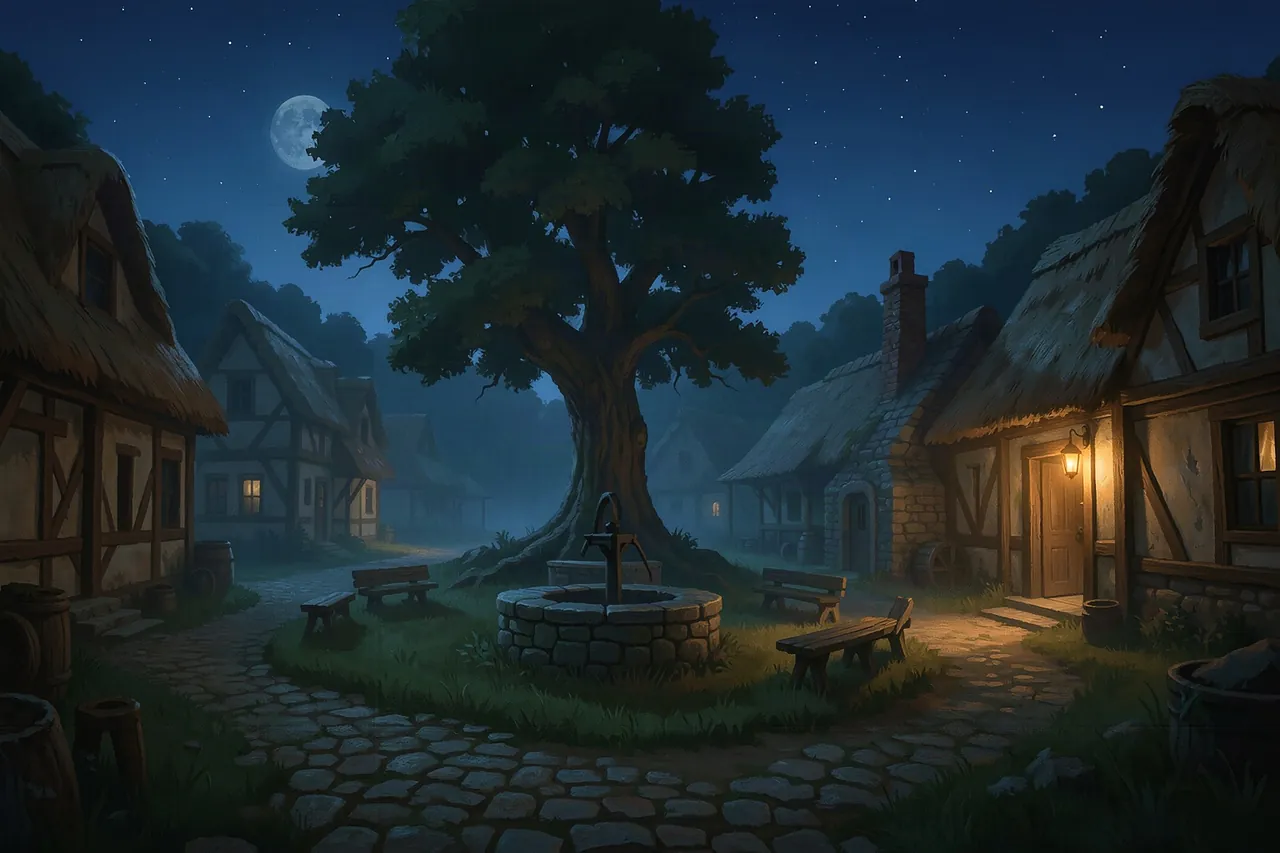
Here's the mix in practice for Polly Wickes, who sells flowers in Bellsworth Yard in the Mythx world of Bellsworth:
- Strength: chatty. She knows which doors buy their posies with gossip and which buy them in silence.
- Flaw: nosy, in a friendly way. She keeps a mental map of everyone's routines.
- Contradiction: she feels a little guilty about how much she notices.
- Neutral: fearless. It makes her first after a pickpocket, and first into trouble.
- Want: to save her flower money for a proper barrow of her own.
Her best friend is Tom Frost, the lamplighter, described in the game as the only person who can out-quiet her out-talking.
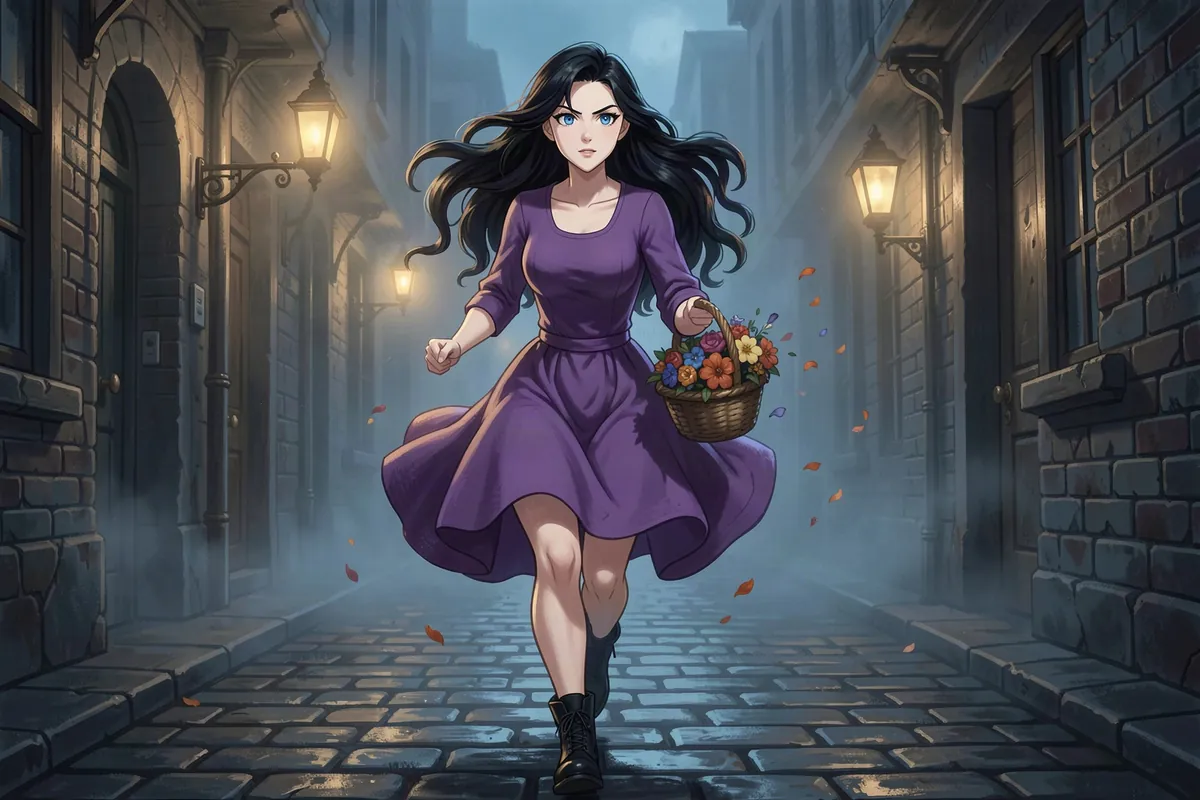
Fearless, shown instead of told: Polly chasing a pickpocket into the fog.
If you're building the character from scratch, start with an archetype first. Our character archetypes guide gives each type's want and fear, and the traits on this page fill in the rest.
Character flaws
A character flaw is a trait that hurts the character or the people around them and that the story makes them face. Writers often reach for the idea of a "fatal flaw," which comes from hamartia, a term Aristotle used in the Poetics. Scholars still argue about whether he meant a flaw of character or simply a mistake, and the Greek root means "to miss the mark" (Wikipedia). For writing purposes, both readings work: a flaw is what makes your character miss.
| Flaw | How it hurts them | Where an arc can take it |
|---|---|---|
| Pride | Won't ask for help, even when it's fatal | Learns to say "I can't do this alone" |
| Arrogance | Underestimates enemies | Loses once, badly, and has to rebuild |
| Cowardice | Runs at the moment that counts | Stands still once, for someone else |
| Stubbornness | Won't change a plan that's failing | Finally turns back, and saves everyone |
| Impulsiveness | Starts fights they can't finish | Learns to count to ten, mostly |
| Recklessness | Gets the people around them hurt | Stops to count who's behind them |
| Jealousy | Sabotages the people closest to them | Admits what they're afraid of losing |
| Greed | Trades people for profit | Gives away the thing they wanted most |
| Distrust | Pushes away anyone who gets close | Lets one person in |
| Need for control | Can't delegate, burns out | Hands over the reins and the sky doesn't fall |
| People-pleasing | Can't say no, loses themselves | Says no and survives the silence |
| Perfectionism | Never finishes anything | Ships something flawed and it's loved |
| Self-righteousness | Judges others harshly | Does the thing they condemned |
| Vengefulness | Destroys their own life for payback | Lets the enemy live, or doesn't, and pays |
| Dishonesty | Lies until the lies collapse | Tells the truth when it costs everything |
| Insecurity | Needs constant approval | Acts without waiting for permission |
| Cynicism | Refuses to hope | Is proven wrong by someone kind |
| Naivety | Trusts the wrong people | Learns caution without losing warmth |
| Vanity | Cares more about image than people | Looks ridiculous in public to help a friend |
| Holding grudges | Can't let go of old wrongs | Forgives, and is surprised how light it feels |
| Secretiveness | Hides what others need to know | The secret comes out and the relationship survives |
| Martyr complex | Sacrifices too much and resents it | Asks for what they need |
| Indecision | Lets chances slip away | Makes a choice and lives with it |
| Laziness | Lets others carry the load | Finds something worth working for |
| Workaholism | Neglects everyone for the job | Misses one thing that matters and changes |
| Fear of commitment | Leaves before anyone can leave them | Stays |
| Hot temper | Says what can't be unsaid | Walks away instead of swinging |
| Prejudice | Misjudges a whole group | Owes their life to someone from it |
| Selfishness | Takes and never gives | Gives when no one is watching |
| Envy | Can't enjoy anyone else's success | Celebrates a rival, and means it |
How to make a flaw work in a story:
- Make it the dark side of a strength. Loyalty becomes blindness to a friend's crimes. Confidence becomes arrogance.
- Root it in the past. A flaw usually grows from an old wound. Our backstory guide covers the wound, the want and the mask.
- Make it cost something on the page. The flaw should lose them a fight, a friend or a chance at least once.
- Decide what happens to it. The character can overcome it, be destroyed by it, or keep it while the world around them changes.
- Don't confuse flaws with quirks. Biting nails or always being late adds texture, but it can't carry a story.
Character motivation examples
A motivation is the reason a character acts. It has two parts: what they want (the goal you could photograph) and why they want it (the need underneath). "She wants to win" isn't a motivation yet. "She wants to win the tournament because the prize money pays her father's debt" is.
| Motivation | Example |
|---|---|
| Survival | He wants to reach the coast before winter because the plague towns have closed their gates to outsiders |
| Protection | She wants to keep her little brother out of the army because their older brother never came back |
| Revenge | She wants the man who burned her mill punished because the town called it an accident and kept him on the council |
| Redemption | He wants to guard the village he once raided, because the people he hurt are the only ones who'd recognize who he's become |
| Belonging | She wants a seat at the guild table because she has never been part of anything that chose her |
| Love | He wants to cross the border to find her because she wrote "come if you still can" |
| Freedom | She wants to leave the convent because she was put there at six and never asked |
| Recognition | He wants his name on the cathedral because his master took credit for his windows |
| Proving someone wrong | She wants to pass the knight's trial because her father said girls only break swords |
| Duty | He wants to deliver the king's letter because he swore an oath, even though the king is dead |
| Truth | She wants to know what's in the sealed archive room because her mother's name is on the door |
| Justice | He wants the judge exposed because an innocent man hangs on Friday |
| Security | She wants enough coin to buy the farm because she has been evicted three times |
| Power | He wants the throne because he's the only one who knows how bad the next king would be |
| Escape | She wants a new name in a new city because the old one is on a wanted poster |
| A promise | He wants to plant the orchard because he promised his dying wife he would |
| Home | She wants to find the island on her grandmother's map because she has never belonged anywhere else |
| Saving a place | He wants to keep the inn open because it's the last thing in the valley the lord doesn't own |
| Forgiveness | She wants her sister to speak to her again because she was the one who left |
| Creation | He wants to finish the clock because no one has ever built one that runs backward |
| Legacy | She wants an apprentice because she's the last person who knows the old songs |
| Faith | He wants to reach the mountain shrine because the god there answered him once |
| Fear of failure | She wants to be first in every class because second place once meant no supper |
| Guilt | He wants to find the boy who went missing on his watch because he fell asleep |
| A cause | She wants the factory closed because the river it poisons runs past the school |
| Thrill | He wants to sail past the edge of the map because staying home feels like dying slowly |
| Knowledge | She wants to read the forbidden book because no one will tell her why it's forbidden |
| Approval | He wants his father to see him fight because his father has never once watched |
| Rest | She wants one quiet year because she has been at war since she was fifteen |
| Making amends | He wants to rebuild the bridge because he's the one who burned it |
Want more starting points? The backstory generator writes a character's motivation, flaw, secret and story hooks from a one-line idea.
How to write a character description
A good character description gives the reader one strong picture and a hint of personality, then gets out of the way. These rules cover most of it:
- Lead with one telling detail. One detail the reader will remember beats a list of five they'll forget.
- Use details that say something. Chewed fingernails say more than "brown eyes." A detail should hint at a trait, a job or a past.
- Describe through someone's eyes. A pickpocket notices purses. A mother notices thin wrists. Let the viewer's priorities pick the details.
- Mix in movement. Show the character doing something while you describe them, instead of freezing them for an inventory.
- Skip the mirror. A character studying their own reflection is the most common way to describe a narrator, and readers have seen it too many times.
- Stop early. Two or three details are enough on first appearance. Add more later, when they matter.
Sample character descriptions
Ten short examples you can use as models. Each one is built around a single trait.
| Genre | Sample description |
|---|---|
| Fantasy | The innkeeper wipes the same clean mug while she listens, and her eyes go to the door every time it opens. She's been expecting someone for eleven years. |
| Fantasy | He carries his sword like a man carrying a sleeping child: carefully, and as if he'd rather put it down. |
| Sci-fi | Captain Oyelaran has a voice built for bad news. She delivers the casualty count the same way she reads the weather, and only her hands, locked behind her back, give her away. |
| Romance | He laughs before the joke is finished, every time, and then apologizes for it, which makes it worse and somehow better. |
| Mystery | The professor's tweed jacket is older than most of his students, but the watch on his wrist is new and costs more than his house. |
| Horror | The new neighbor waves every morning at seven. She waves at the house, at the car, and at the empty swing, for exactly the same length of time. |
| Anime | She has pink hair, a broom she insists is a weapon, and a laugh you can hear from the next class over. Nobody has ever seen her lose her temper, and nobody wants to. |
| Victorian | Polly Wickes sells flowers in Bellsworth Yard and knows everyone's business by noon. She talks fast, laughs louder, and will chase a pickpocket into the fog before anyone else has looked up. |
| Victorian | Tom Frost, the lamplighter, says about one sentence an hour. He also notices the glove on the cobbles that the rest of the street walked past. |
| Villain | The duke is never rude. He remembers your children's names, asks after your mother, and has never once in his life been told no. |
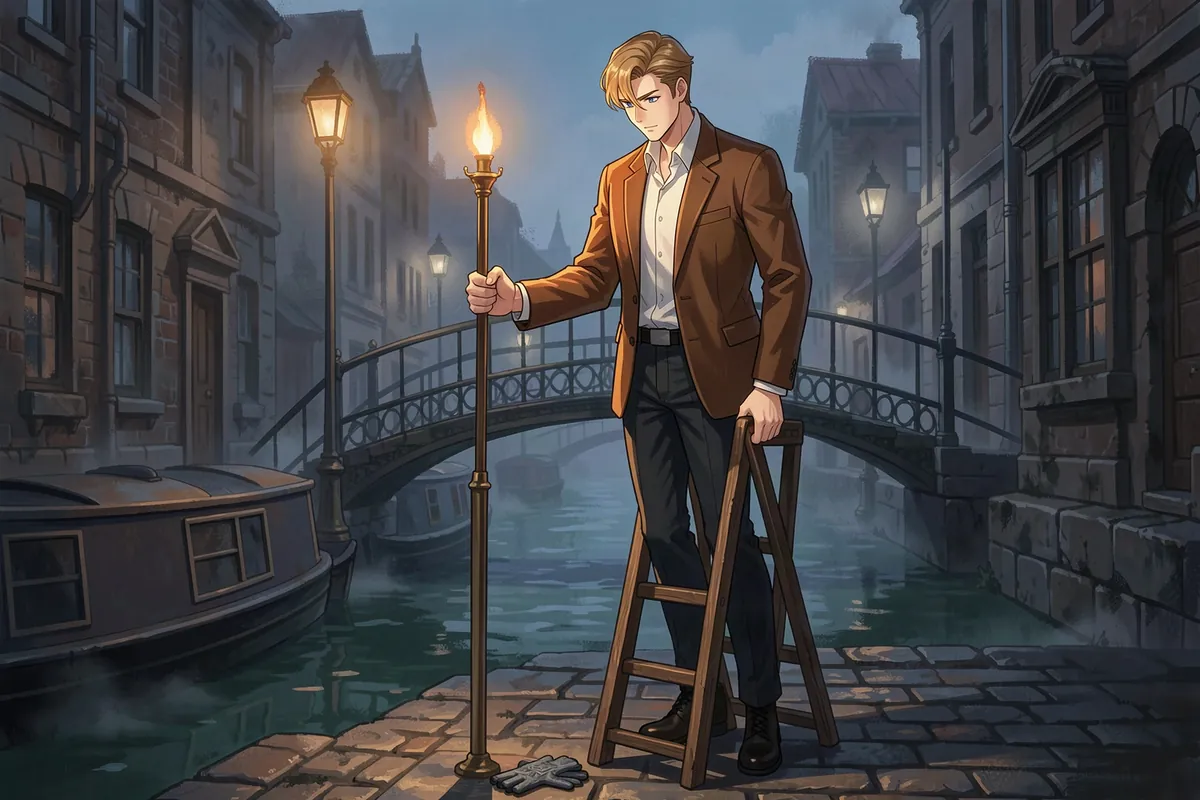
Observant: Tom Frost and the glove nobody else noticed. Same lamplighter, same look, a different evening.
The Polly and Tom descriptions come from the cast of Bellsworth, a Victorian London world in Mythx, the AI roleplay game we make. Each character there has a few set traits (Polly's are chatty, fearless and nosy in a friendly way), and the game draws them the same way from picture to picture. You arrive as a newcomer, design your own hero's look, and your hero's traits come from what you say and do. It's free to start in your browser with no sign-up, and your first scenes come illustrated.
Character traits FAQ
How many character traits should a character have? Three to five that matter: a couple of strengths, a flaw and something surprising. Minor characters can get by on one strong trait.
What's the difference between a character trait and a character flaw? A trait is any lasting quality. A flaw is a trait that causes harm and that the story makes the character face. Stubbornness is a trait until it gets someone killed, and then it's a flaw.
What are the five main personality traits? Psychologists' Big Five model uses openness, conscientiousness, extraversion, agreeableness and neuroticism (Wikipedia). They're a handy check that a character's traits aren't all variations of one thing.
What is a fatal flaw? The flaw that brings a character down. The idea comes from Aristotle's hamartia, though scholars debate whether he meant a flaw or a mistake (Wikipedia).
What are good character traits for a main character? Traits that make them act. Curious, stubborn, protective and ambitious characters go places and cause trouble, and that's what moves a plot. Pair them with a flaw from the list above.
What is a neutral character trait? A trait that's neither good nor bad on its own, like cautious, blunt or competitive. Whether it helps or hurts depends on the situation.
How do you show a character trait instead of telling it? Put the character in a situation where the trait changes what they do, then describe the action. "Brave" is telling. Walking into a burning barn with shaking hands is showing.